How I Run Amazon Ads at 10 Cents on the Dollar

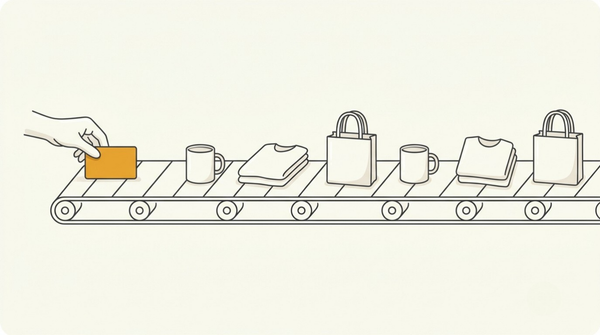
You want more sales. Running ads is one of the fastest ways to get them.
The catch is that running ads the normal way is expensive, and it can quietly eat every dollar of profit you make. So this is about a different way to run them. One where you risk almost nothing, learn as you go, and still come out ahead.
I had to learn the hard way first.
What running ads the old way cost me
I spent over five thousand dollars on Amazon ads before any of it started to make sense.
I picked keywords. I watched them. I raised bids, lowered bids, paused the bad ones, and started over. It was a part time job on its own. And after all that fiddling, my ads ran at 55%, then 70%, then 110% ACOS.
In plain terms, ACOS is how much of your sales gets swallowed by your ad spend. A 110% ACOS means I paid more for the ad than the sale was even worth. My ads were not just unprofitable. They were lighting money on fire.
What ACOS actually means
What does ACOS stand for?
Advertising Cost of Sale. It is the share of your ad-driven sales that gets spent on the ads themselves.
How is it worked out?
Ad spend divided by ad sales. Spend $25 on ads and make $100 in sales from them, and your ACOS is 25%. The lower the number, the more of each sale you keep.
That is the trap with the usual approach. You fight for the popular keywords, everyone else is bidding on those exact same words, and the price per click climbs until there is no profit left in the sale.
The thing that makes it work is having a lot of products
Before any of the settings matter, one fact matters more. I sell on Amazon with a huge range of products. Not a handful of designs, thousands of them. I build them in bulk with an automation system that lists thousands at once.
That single fact changes how I run ads completely.
When you have thousands of listings, you do not need to win the keywords everyone fights over. You can show up on the cheap, related searches almost nobody is bidding on, because you have enough products to cover all of them. The volume does the work that high bids do for everyone else.
This is why a method like mine matters here. With five products, there are not enough cheap searches to catch anything. With thousands, there are far more than enough.
Making sales at 10 cents on the dollar
So here is the better way. I make sales while spending about 10 cents for every dollar that comes back.
That is a low ACOS, under 15%, which means almost all of the money is profit. I have spent a little over two thousand dollars on these ads and made more than ten thousand in sales, at an average of 17 cents per click. That per click number is my CPC, what I pay each time someone clicks the ad.
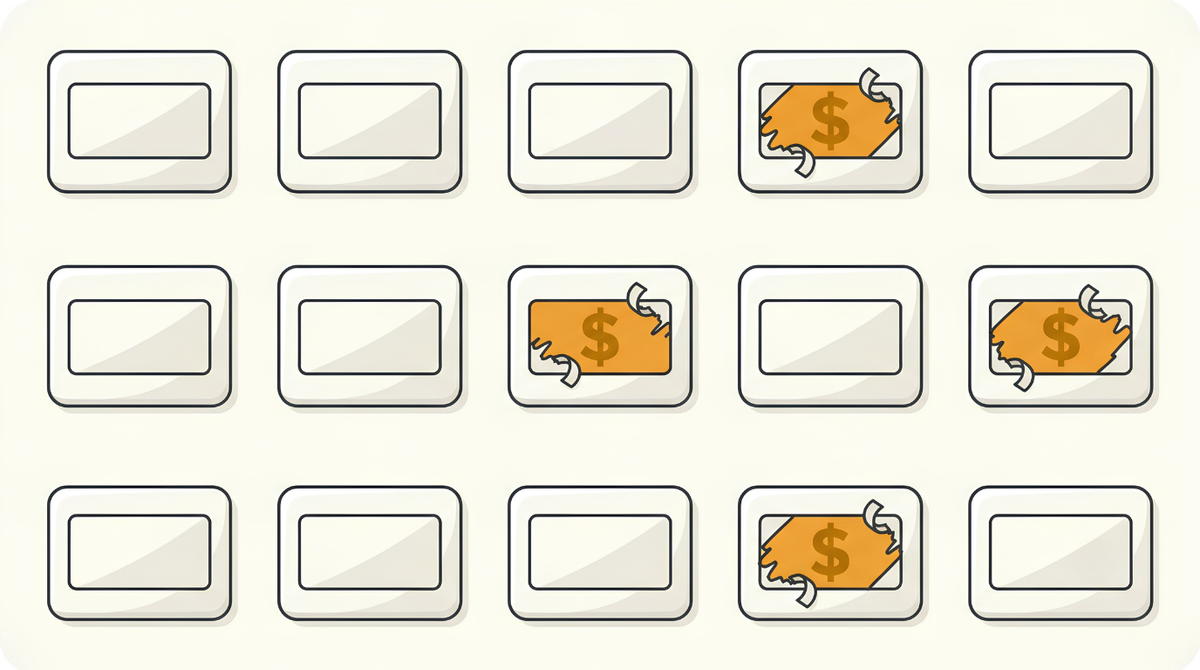
I do it with what I call a lottery ads campaign.
Bid low on a lot of keywords, and let the winners find you.
A lottery ad is exactly what it sounds like. You place tiny bids across a huge number of keywords and hope some of them hit. Most clicks cost you next to nothing, and the sales that come through are nearly all profit.
How I set up a lottery ads campaign
The setup is simple. You put all your products into one campaign, let Amazon match them to searches on its own, and keep the bid tiny.
Here is exactly how I do it.
I split my products into campaigns by niche type. One for locations, one for people's names, one for occupations, and so on. Same low bid across all of them.
Then inside each campaign:
- Targeting: automatic, with close match turned on and nothing else.
- Starting bid: 6 cents.
- Bidding strategy: dynamic bids, down only.
- Bid adjustments: 350% top of search, 250% rest of search, 100% product pages.
- Budget: whatever you are comfortable spending in a day. It often will not even spend the whole thing.
What those settings actually do
Automatic targeting with close match.
Instead of you picking keywords, Amazon reads your listing and matches it to searches. Close match keeps it to the searches most related to your product, so you are not paying for random clicks.
Dynamic bids, down only.
Amazon is allowed to drop your bid when a click looks unlikely to sell, but never raise it. It can only ever spend less than your number, never more.
Bid adjustments.
A multiplier on top of your base bid for where the ad shows. At 6 cents, a 350% top-of-search adjustment still only reaches about 27 cents, so even your "high" placement stays cheap.
That is the entire campaign. Tiny bids, Amazon doing the matching, and pennies for each click that comes through. You spend cents to land a click, and the sales that follow are almost pure profit.
Ads amplify your listing, they do not save it
One thing to be honest about. These ads are not going to make you rich on their own.
Ads amplify your listing. They do not fix it.
If your listing is solid, your title, your images, your price, then ads pour fuel on something that already works. If your listing is weak, ads just help you lose money faster. There is no magic setting around this, and no campaign that rescues a product nobody wants.
Know your numbers before you bid
Before you touch a single bid, work out what you actually make on each sale. That number tells you the highest ACOS you can run and still come out ahead. It is called your break even ACOS.
Say you sell an item for $19.95 plus $4.95 shipping, and you make $10 profit on it. Your break even ACOS is 10 divided by 19.95, which lands at about 50%. Shipping stays out of that math, since Amazon does not count it in your ACOS.
So at a 50% ACOS you cover the ad and pocket nothing. From there you set a target lower than that. Maybe you want to keep at least 25% profit, so you aim for around a 25% ACOS and leave yourself plenty of cushion.
💡 Leave yourself room. Break even is the point where the ad eats all your profit, not the number to aim for. Set your target well below it so a slow week never tips a campaign into the red.
Adjusting it week to week
Once it is running, the whole job is a weekly check.
If a campaign is above your target ACOS, lower the bid by one cent and wait a week. Small moves. You are nudging it back into profit, not yanking it around.
If a campaign is sitting well below your target, you have room to spare. Raise the bid a cent or two to pull in some extra sales while you are still profitable.
That is the rhythm. Check it once a week, move a cent at a time, and let it run.
This is the ad approach I wish I had found before I burned through five thousand dollars learning what does not work. It is slow, it is a little boring, and it makes money. You stop chasing the expensive keywords, you let a wide net of cheap clicks do the work, and you keep almost all of the profit.
Give it a slow week or two before you judge it. Then watch the cents add up.
Talk soon,
Nick T