How I List 10,000 Print on Demand Products in an Hour

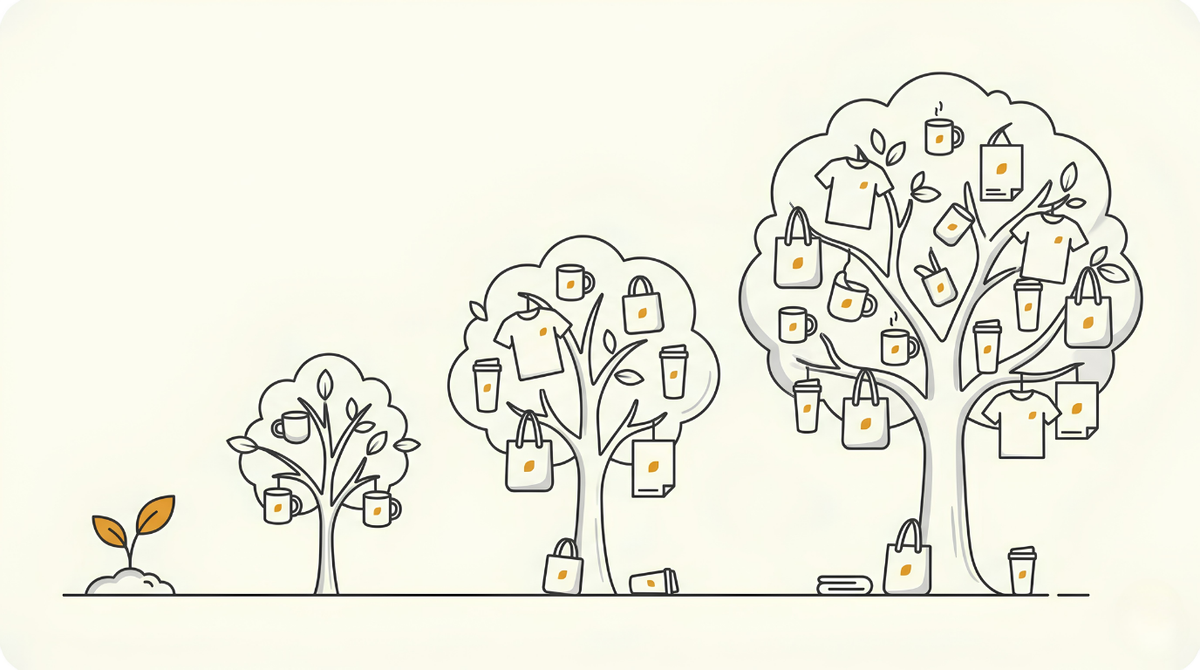
I can take one idea and have nearly ten thousand products listed for sale in about an hour.
Not ten. Ten thousand. From a single design, made one time.
The speed is not really the point, though. The point is what makes the speed possible.
I stopped trying to find a winner.
The obvious way to sell online is to chase one. Find the perfect product, pour everything into it, and hope it lands. If you have ever tried that, you know how it feels. You bet big on a single guess, and most guesses miss. One slow product and you are back to square one, staring at the search bar, trying to out-guess a market that nobody can reliably out-guess.
So I quit guessing. Instead of fishing for one big catch, I cast a wide net.
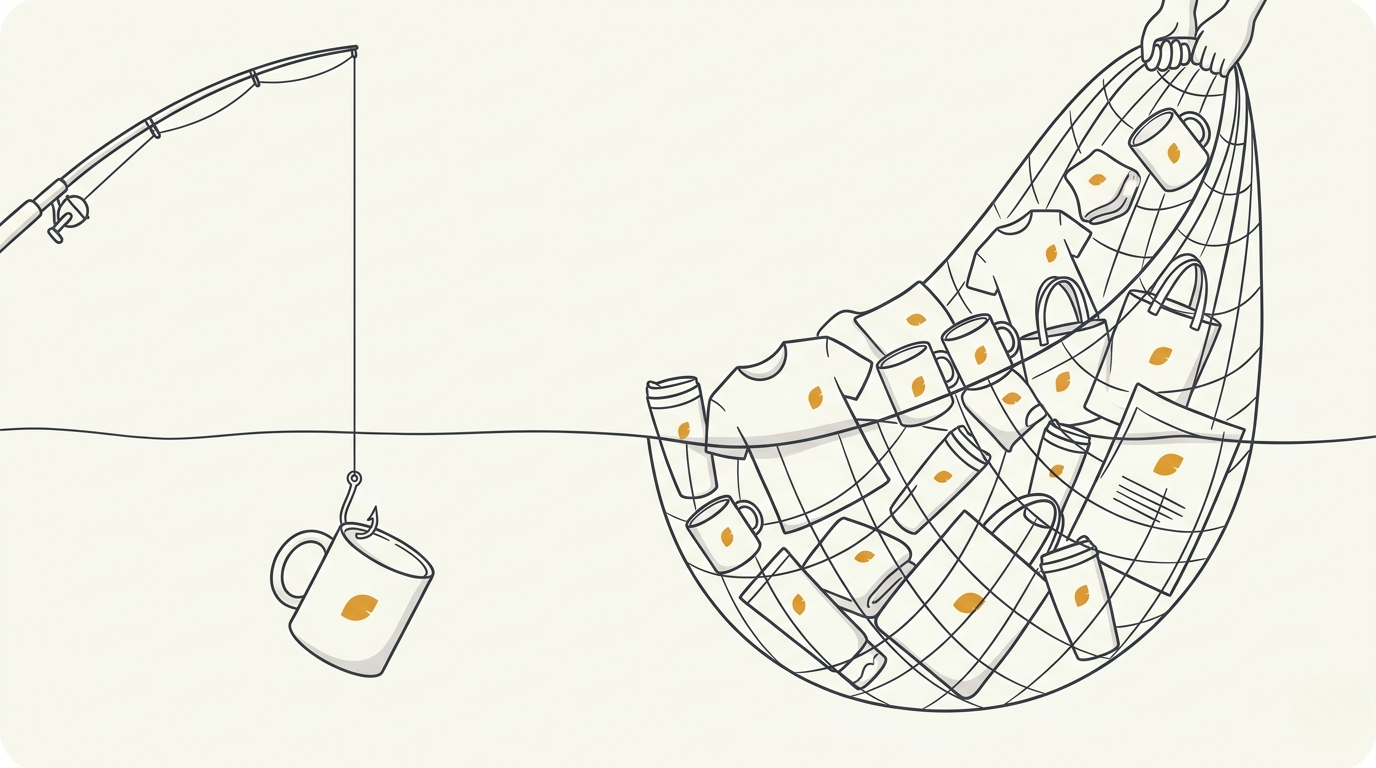
I put thousands of good designs out at once and let the winners show themselves. I cannot know which design will sell before it sells, and the truth is nobody can. So instead of trying to be right, I built something that does not need me to be. I only need a small slice of all those products to land, and with enough of them live, a few always do.
Think about what that means. If a slim fraction of ten thousand products sells, that is still steady sales every month, from work I did once. I do not need a home run. I need a field wide enough that the base hits add up. A single bet can never do that. A net can.
This works best because of one detail about where I sell. You can run a wide net on other marketplaces too, it is just harder when every listing costs you money. The route I use is Amazon FBM, where listing a product costs nothing past one flat monthly fee, so putting up a thousand products costs the same as putting up one. That flat fee is why I picked it over busier routes like Etsy and Amazon Merch. If you want the full case for it, I broke it all down here. Once listing is basically free, holding back makes no sense at all. Putting out a huge range of products is no longer just a nice bonus, it is the whole advantage.
I don't pick the winner. I make room for thousands of tries, and let the winner pick itself.
One thing worth being clear about, because it is easy to take the wrong way. A wide net is not a license for junk. Every single design still has to be good, the kind of thing a real person would actually want on their wall or their coffee mug. Volume and quality are not a trade. You do both, or the net catches nothing.
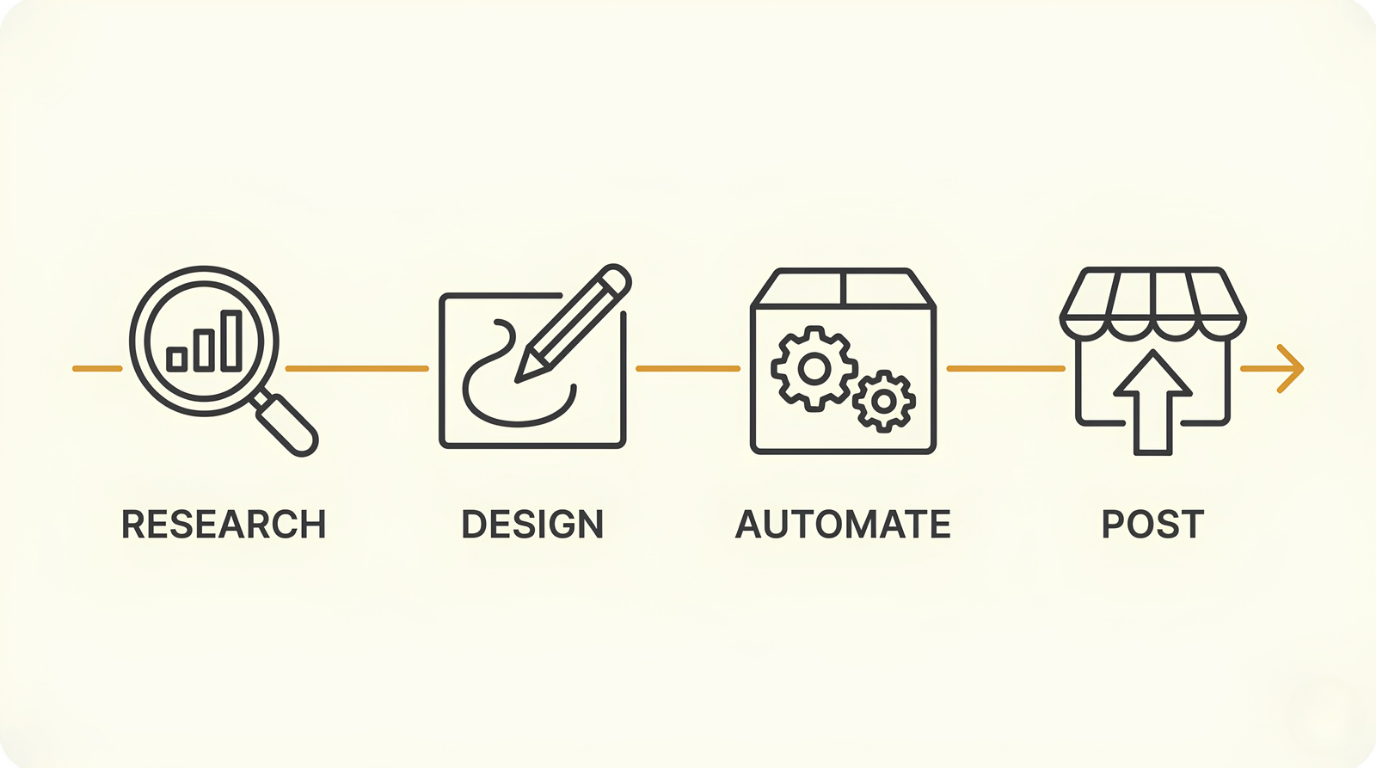
So how does one design quietly become thousands? This sounds like it must be complicated. It really isn't. The whole thing runs on four steps, and only the first two are actually me. After that, automation does the heavy lifting.
Step 1: Find what is already selling
The first step is research, and it is the easiest one to overthink.
You are not inventing demand here. You are finding it. Right now, somewhere on a marketplace, a certain kind of design is selling by the thousand. Your only job is to notice which kind.
It is tempting to wait for the perfect method. There isn't one. Open any marketplace, search a plain term like "funny mug" or "city t-shirt," and look at what is genuinely moving. The platform will tell you, if you know the small signals to read.
You are not looking for one product to lift. You are looking for proof that a whole style sells. That difference sets up everything that comes next.
How do you tell what is already selling?
On Amazon?
Check the Best Sellers Rank (BSR). A lower number means more sales, so a low BSR on a print on demand product is a strong sign that style is moving.
On Etsy?
Look for the live signals on a listing, like "20 sold in the last 24 hours" or "5 people have this in their cart." They tell you demand is happening right now.
Where do I start?
Search a plain term like "funny mug" or "city t-shirt" on any marketplace and study the designs that keep showing up near the top. Repetition is its own signal.
Step 2: Design around one word you can swap
This is the step that makes every step after it possible, so it is worth slowing down for.
You take the style you saw selling and make your own version of it. Same kind of appeal, same energy, your own work. Take inspiration from what sells, but never copy it. Lift someone's actual artwork or wording and your listings get pulled, and it can turn into real legal trouble.
Now the choice that makes the whole thing scale.
Do not design a one-off. Design around one word you can swap out.
"I love New York" is the perfect shape. "New York" is the word you swap. Change it for any city on earth, any country, any state, and the design still works perfectly. One idea becomes a thousand versions, every one as good as the first, all built from the same master.
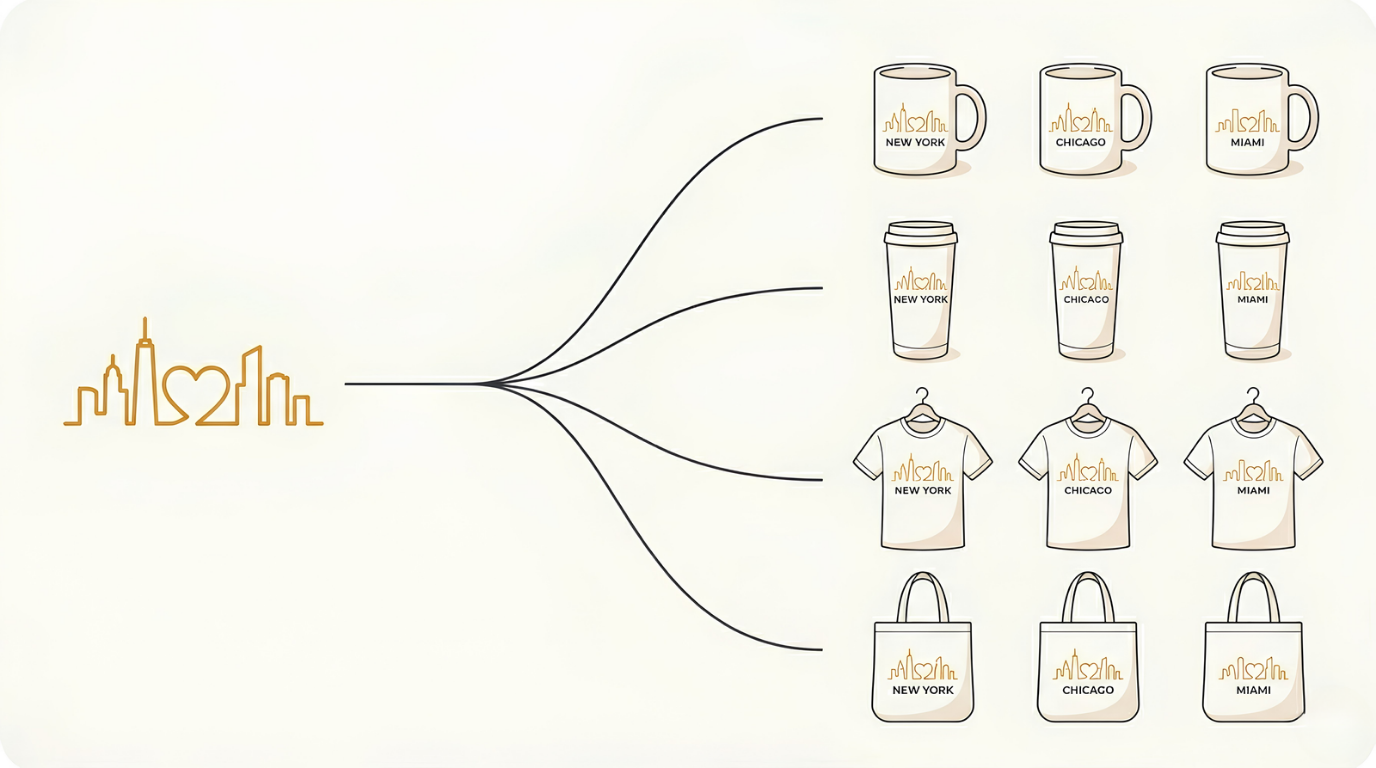
That is the difference between a design that gives you one product and a design that gives you a thousand. You are not really drawing a picture. You are building a mold, ready to be poured into a thousand shapes. Find that, and the hard part of your day is already behind you.
💡 The real lever. The value is not in any one design. It is in picking an idea that can hold a thousand versions instead of just one.
Step 3: Let the system multiply it
Now the work stops being yours.
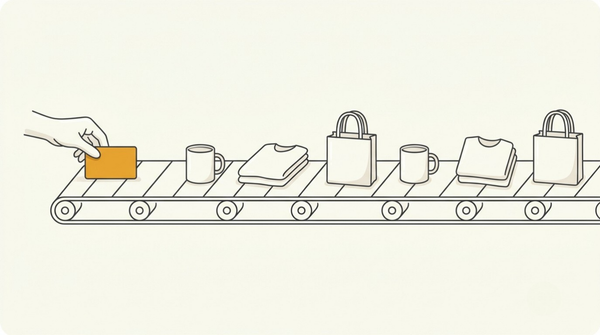
You made one master design built around a word you can swap. From here, automation tools take that master and run the swap for you, turning "I love New York" into "I love Chicago," "I love Miami," and a thousand more cities besides. Then they drop each version onto every product you sell: mugs, shirts, tumblers, tote bags.
It does not stop at the artwork. The same system builds the mockups, the clean photos a shopper sees on the listing, and writes the listing text too, the titles and keywords that help each product get found in search.
Weeks of manual grind, drawing each version, photographing each mug, typing each title, collapse into one automated run. You built one thing. The system hands back thousands, finished and ready to sell. This is where that hour goes.
Step 4: Push it all live
The last step is getting everything onto the marketplace and over to the supplier who prints and ships.
You do not do this by hand either. The same kind of automation uploads the whole batch to your supplier and lists every product on your marketplace in one go. I use Amazon FBM, but the system works the same wherever you choose to sell.
And then you are genuinely done. When an order comes in, it goes straight to the supplier, who prints your design and ships it to the customer's door. You never see the product, never pack a box, never touch it.
Two steps are you. The rest is the machine
Look back at what you actually did.
You found what sells. You made one smart design built around a word you can swap. That is the whole human part. Two steps.
Everything after that runs without you.
The machine itself is not some fancy custom build. It is a lean skeleton, four steps wired together, most of it ordinary automation tools pointed in the right order. I cannot code a line of it myself. I designed the shape and let the tools fill it in, which means there is nothing here you could not build too.
You do not need to be a designer. You do not need to code. You do not need to be a genius at picking products, because you are never betting the business on any single one. You just need a net wide enough that the winners can find you.
That is the whole system, end to end. You build the shape once, and it keeps earning long after you step away.
And none of it was ever reserved for me. The same net is sitting there for you to cast.
See you soon,
Nick T