Amazon Capped Me at 2,000 Listings a Week. I Got It Lifted.

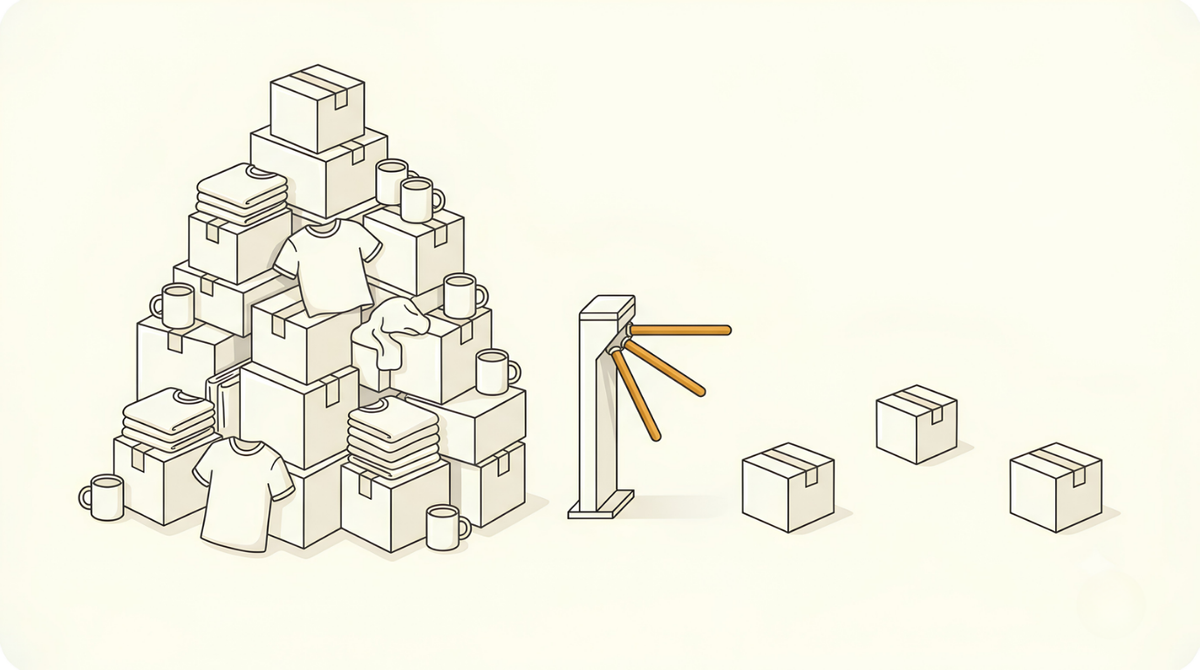
Amazon raises your listing limit when you start selling. That is the whole mechanism, and no number anywhere tells you how many sales it takes.
There is a second route, and it is the one that actually worked on my account. I asked them to lift it.
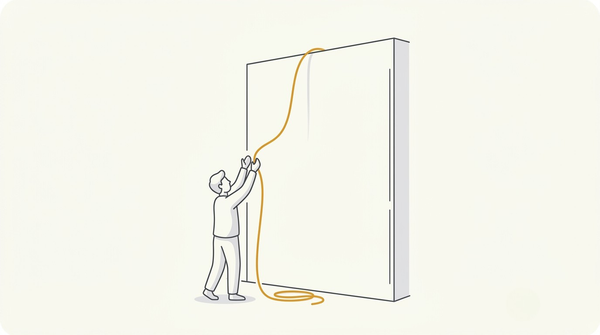
My catalog is past 300,000 products now, and getting there was never held up by design work or by the automation. It was held up here, at this one wall, over and over. If you are building a catalog on Amazon FBM, you will meet it too: a batch sitting ready to go, and Amazon telling you that you have listed enough for this week.
The cap is real, and it is usually a few thousand a week
Amazon limits how many new listings you can create in a given week. Mine sat at 2,000 SKUs. A SKU is just one product listing, so that is 2,000 individual products, and once you hit the number the rest of the batch waits for the week to roll over.
That number is not the same for everyone. Sellers report caps in the thousands, in the hundreds, and at figures low enough to look like a bug. Amazon does not publish the number and does not explain how it landed on yours. So do not go hunting for the official figure. There is not one.

It bites hardest when volume is the whole method. Posting 2,000 products a week sounds generous right up until you are trying to get 100,000 of them live.
Sales are the only lever that moves it
The limit exists for one reason. Amazon does not want its catalog flooded with thousands of thrown-together listings from an account that has never sold anything, because every one of those listings ends up in front of a real shopper. So new sellers get held to a trickle until there is evidence the products are worth showing to people.
The cap is not a judgment on your products. It is Amazon waiting for evidence.
Sales are that evidence. Once units are moving, the constraint loosens: Amazon either raises the ceiling or takes it off completely. And there is no threshold you can aim at. It is not 10 sales, or 50. It is enough that the account stops looking like a risk.
💡 The real ceiling. There is one hard number, and it is 1.5 million SKUs. Past that Amazon charges a high-volume listing fee of $0.001 per SKU per month. Treat it as the lifetime size of your catalog, not a weekly problem.
Which leaves you somewhere awkward, because you need sales to lift the cap, and the cap is throttling the listings that would produce those sales. Three things get you out of that loop.
Three things to do while you are capped
1. Make the listings you do post worth posting.
At 2,000 a week, a listing that was never going to sell is expensive. It spent one of your slots. So the work shifts from posting more to posting better: the right demand behind the design, keywords a real buyer types, a mockup that looks like the thing they pictured. If products are already live and doing nothing, the fastest move is to find out which step is actually leaking before you burn another week of slots. I broke that down here.
2. Put ads behind what is already up.
Ads will not create demand that was never there, but they will get a brand-new listing seen while it has no history to rank on, and being seen is the front of the funnel that ends in the sales you need. I run very low bids spread wide across the catalog rather than fighting for expensive keywords, and I wrote out exactly how that campaign is built and tuned here.
3. Write to Amazon and ask for an exemption.
This is the one that did it for me.
I was capped at 2,000, so I emailed them and asked for the limit to be increased. What came back was not a bigger number. It was an exemption: one month with no posting limit at all, after which they would re-evaluate the account.
I used it. I posted as much as I physically could inside that window, and the sales followed the volume, which is the whole bet the system runs on. Then the month ended.
The limit never came back on.
That is one account and one answer, so I cannot promise you the same reply. But the ask costs an email, and the downside is a no.
If you want to follow the rest of this as it happens, the wall I hit next and whatever gets me past it, you can get it by email.
Keep posting,
Nick T