Ten Slots Is All You Get on Amazon Merch. Spend Them Right.

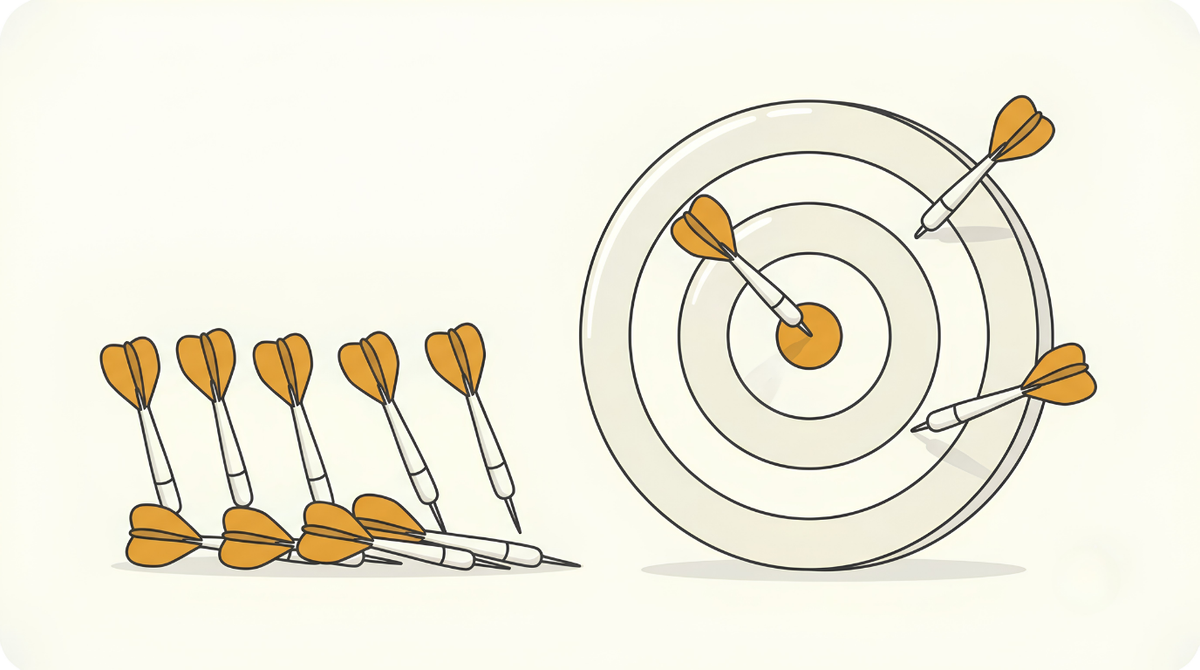
Amazon Merch on Demand hands you 10 product slots. Ten. Sell nothing with those ten and that is where you stay, because the only thing that unlocks more slots is sales.
So the way out is not a trick. It is one product that people actually want to buy.
That sounds obvious and it is, right up until you are sitting at tier 10 with ten designs up and nothing happening. Then the question stops being "what should I make" and starts being "how do I make ten shots count." That is what this is about, plus a few things you can do around the edges to give those ten a better chance.
What actually lifts the cap
Merch is Amazon's own print on demand program. You upload a design, Amazon prints and ships it when an order comes in, and you take a royalty. The catch is the tier system. You start at tier 10, which means 10 live designs at a time, and you climb by selling.
The number people quote for the first jump to tier 25 is around 10 sales with most of your slots in use. Amazon has never published the exact bar, and every guide you read gives a slightly different figure, so treat all of them as estimates rather than a checklist.
It does not change anything anyway. The lever is the same whatever the number turns out to be.
Sales are the only currency Merch accepts.
Before I go any further
I have never sold on Amazon Merch. I applied and never got in, so I am not going to stand here and tell you I climbed these tiers myself.
What I have done is run print on demand for a couple of years on Amazon FBM and on Etsy. Different platform, different fees, different limits, and none of them cap how much you can list. But the job underneath is the same one: put a design in front of a person who was already looking for something like it. Everything below is that part, and that part travels.
What a good product actually means
Right product, right audience, right time.
Start with demand, because you cannot create it. Before you draw anything, you need to know that people are already buying in this space and, more importantly, what they are buying it for. A gift for a new dad is a different product from a joke shirt for a group chat, even when the words on them look similar.
Which means you are not designing what you like. You are designing what your buyer likes, and those two only overlap by accident.
Go look at what is already selling in the niche you are eyeing. Not to copy it, to read it. The winners in any niche share a pattern: a certain layout, a certain kind of phrasing, a certain amount of text, a certain feel. That pattern is the audience telling you what they respond to, in public, for free. Take the pattern and put your own idea through it.
Then match the wrapping to the moment. A mockup shot in a Christmas setting sells a Christmas design and does nothing at all for a summer one. Same design, same quality, wrong month, no sale.

Keywords are the same idea in text form. Use the words your buyer would actually type, not the broad ones with the big traffic numbers. Broad terms bring you people who were never going to buy, and you are not in a position to absorb that. With ten slots you cannot afford to line up against a million other sellers for a term that vague.
The easiest fix for all of this is to start in a niche you are genuinely part of. If you already play the sport, follow the hobby, or work the job, you know the in-jokes, the words, and what would make you stop scrolling, because you are the customer. That is real research you already did without meaning to.
Ten slots is not a small version of a big store. It is ten chances to be right.
Use all ten
Fill every slot. All of them, now.
You do not find out what works by thinking about it harder. You find out by putting it in the market and watching. Ten live designs is ten pieces of information coming back to you; six live designs is six, and the four empty ones are telling you nothing at all.
If yours are already up and quiet, you are not guessing either. You have numbers, and they will tell you whether the problem is that nobody sees the listing, that they see it and scroll past, or that they click and do not buy. I broke the three fixes down step by step here.
And when a design has clearly gone nowhere, delete it and put something new in that slot. A dead listing is not resting, it is occupying one tenth of everything you own. Amazon takes the same view, by the way: any Merch listing that goes 18 months without a sale gets removed automatically, and those removals sit on your account history. So the slot was never really yours to sit on.
Every replacement teaches you something the last one did not. That is the actual compounding thing here, not the designs.
Bring your own traffic
Nothing says the sale has to come from Amazon.
This is where designing for a niche you are already in pays you back twice. If you make something for street basketball because that is your world, then you already know where those people are. The group chat, the local court, the forum, the subreddit you have posted in for years.
That is a completely legitimate way to get your first sales, and it is faster than waiting for Amazon to decide your brand new listing deserves impressions. The only rule is that it has to be a place you actually belong. Showing up somewhere for the first time to drop a link is not traffic, it is noise, and everyone can tell.
The grey area nobody says out loud
Then there is friends and family.
Buying your own products is against Merch policy, full stop, so I am not going to dress this up as advice. But a lot of people at tier 10 quietly solve it by mentioning to the people around them that they made a thing, and family tend to be supportive about that. It is a quick exit and you should know it exists.
⚠️ Know the downside. Amazon watches for self-funded sales more closely than it used to, and the penalty does not land on the listing, it lands on the account. A tier you bought your way into is worth very little if the account holding it goes away.
Worth being honest about what it gets you, though. A slot count you bought is not the same as a slot count you earned. You still arrive at tier 25 with no idea which of your designs was any good, and now you have 25 slots to fill with the same information you had before.
Where your ten should come from
There is one more thing that changes how you choose those ten, and it comes from the other side of Amazon.
On Seller Central, run as FBM, there is no listing cap at all. One flat monthly fee, and posting one product costs the same as posting a thousand, so you can afford to be wrong over and over without it costing you anything. That is the reason I went that way in the first place.
It also sets up an order I have written about here, where FBM and FBA are not two sides to pick between but two stages: post wide where being wrong is free, then move the few that actually sell into the place that asks something of you.
Merch slots in at exactly that second stage. Ten slots is the expensive end, so it is not where you go looking. It is where you put designs that already proved somewhere else that people buy them. Test wide on a store with no cap, watch what sells, and hand the winners over.
You never had to choose one of them.
That wider store is the thing I am building and writing up as I go, the parts that work and the parts that don't. If you want it as it happens, you can follow the build by email.
Now go use all ten.
Nick T