[Part 2] Three Fixes for Products That Won't Sell

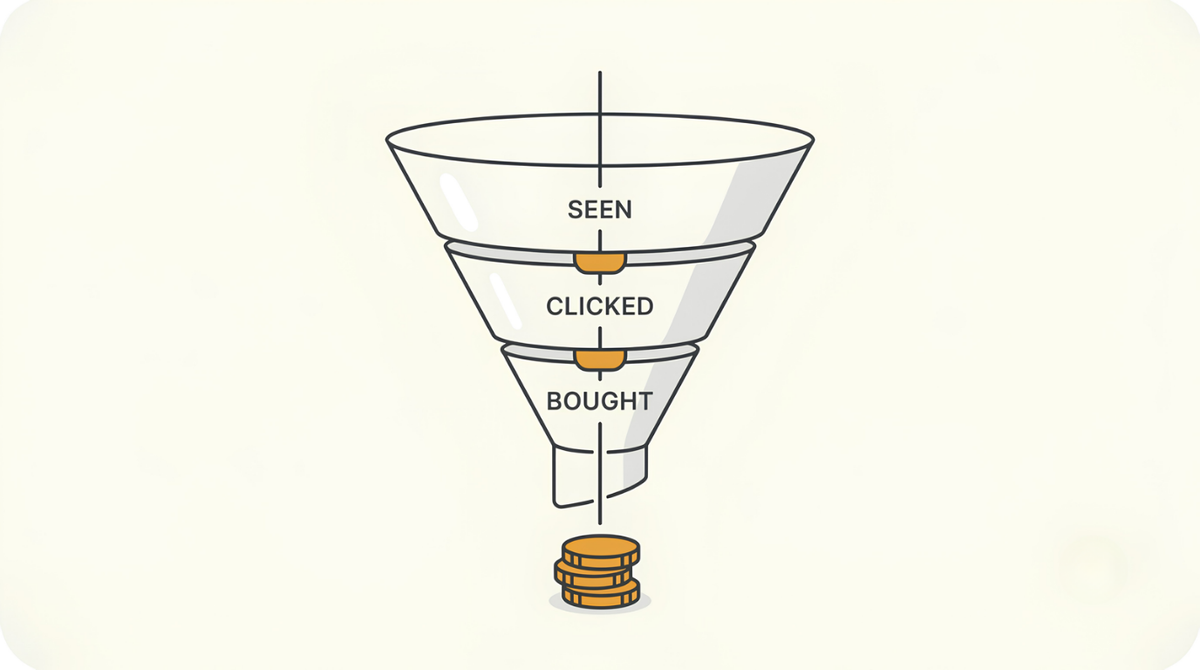
Getting sales isn't one big push. It's finding the single step that's leaking and sealing it.
Your product has to clear three steps before any money shows up. People see it, some of them click it, and some of those buy. Seen, clicked, bought, in that order. When the sales aren't coming, one of those three is where it breaks for you, and each one takes a different fix. Working out which step is leaking is its own job, and I walked through that here.
So let's seal them, starting at the top of the funnel.
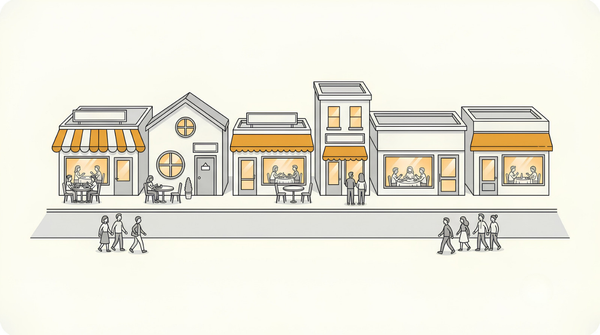
Nobody sees it: fixing impressions
If your listing barely gets seen, the problem sits above anything on the page. Either nobody's searching for what you made, or you're not showing up when they do. Two fixes, in order: find real demand, then use the words people actually type.
Start with demand, because no keyword can save a product nobody wants. Before you design a thing, ask whether real people are already looking for it.
This is where it's easy to trip. You can niche down so hard that you build something only you would ever search for. A shirt for dog moms has thousands of people typing for it every week. A shirt for dog moms who own three-legged rescue greyhounds named Biscuit has an audience of about one. Both feel nice and specific. Only one has anyone on the other end.
You don't need paid tools to check. Look at whether products like yours are actually moving: best-seller ranks, review counts stacking up, listings that clearly sell. If a handful of sellers are all shifting that kind of design, the demand is real. If you can't find a single one, that's rarely an untapped goldmine. Usually it's just a thing nobody wants.
Once the demand is real, the second half is showing up when someone searches. That's all SEO is on a marketplace. It sounds technical. It isn't. You're putting the words people type into your listing, nothing more.
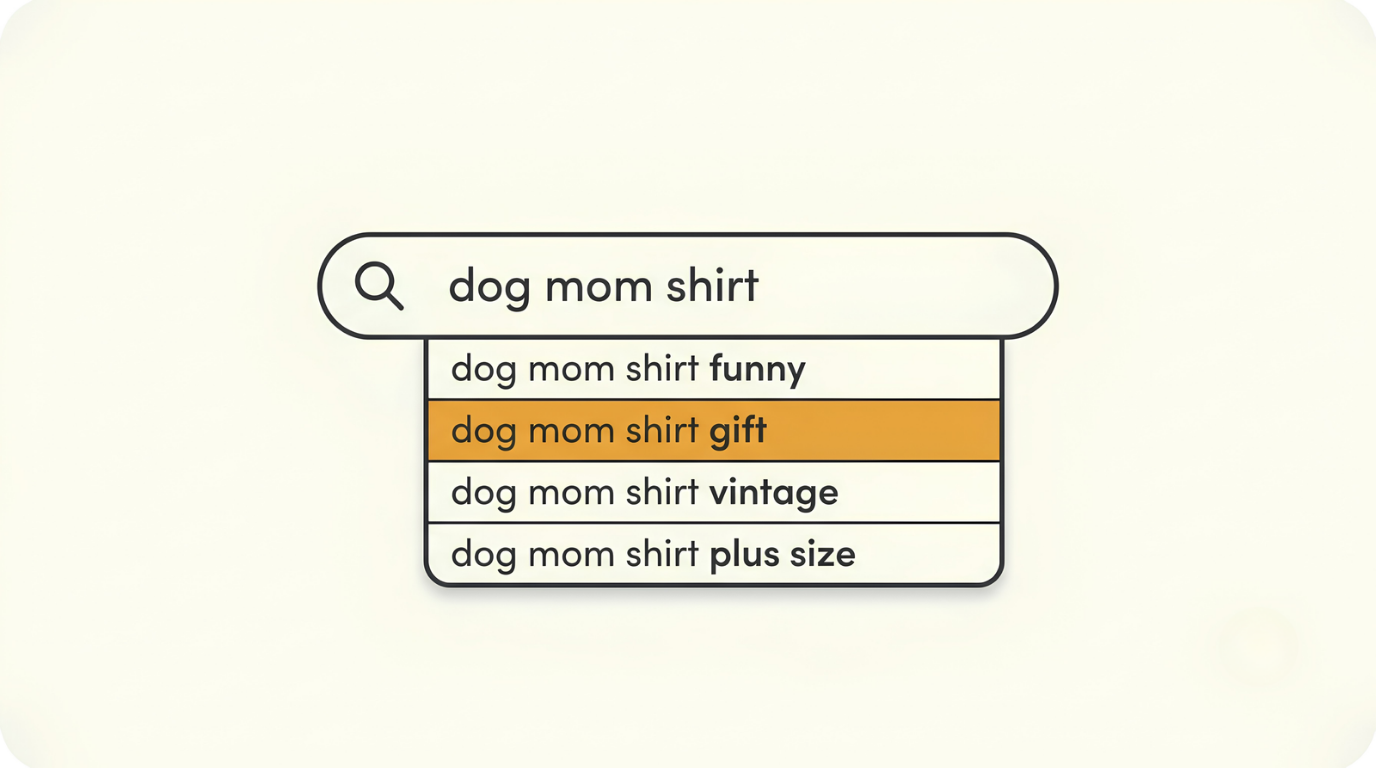
And those words are handed to you for free. Go to the search bar on the marketplace you sell on and start typing what your product is. The autofill suggestions that drop down are real searches, ranked by how often people make them. That's your keyword list. Take the ones that genuinely fit and work them into your title and details. You can do the same by opening the best-selling listings in your niche and seeing which words they lean on.
🔑 Free keyword research. The marketplace search bar's autofill is a live list of what shoppers actually type. Steal the ones that fit your product straight into your listing.
Get this right and the hard part of the top is done: the right product, in front of the right people, showing up when they look.
They see it and scroll past: fixing clicks
Plenty of impressions but almost no clicks means people are seeing your listing and choosing someone else's. That's relevance. Your listing has to match what the searcher actually wants, in two places: the words and the look.
First, the words. It's tempting to chase big numbers and cram popular keywords in even when they don't fit. It backfires. Put "funny cat lover" on a dog-mom shirt because cat terms get searched more, and yes, cat people will see it. Then they click, realize it's a dog shirt, and leave. You bought the visit and got nothing. Volume without relevance just fills your listing with the wrong people.
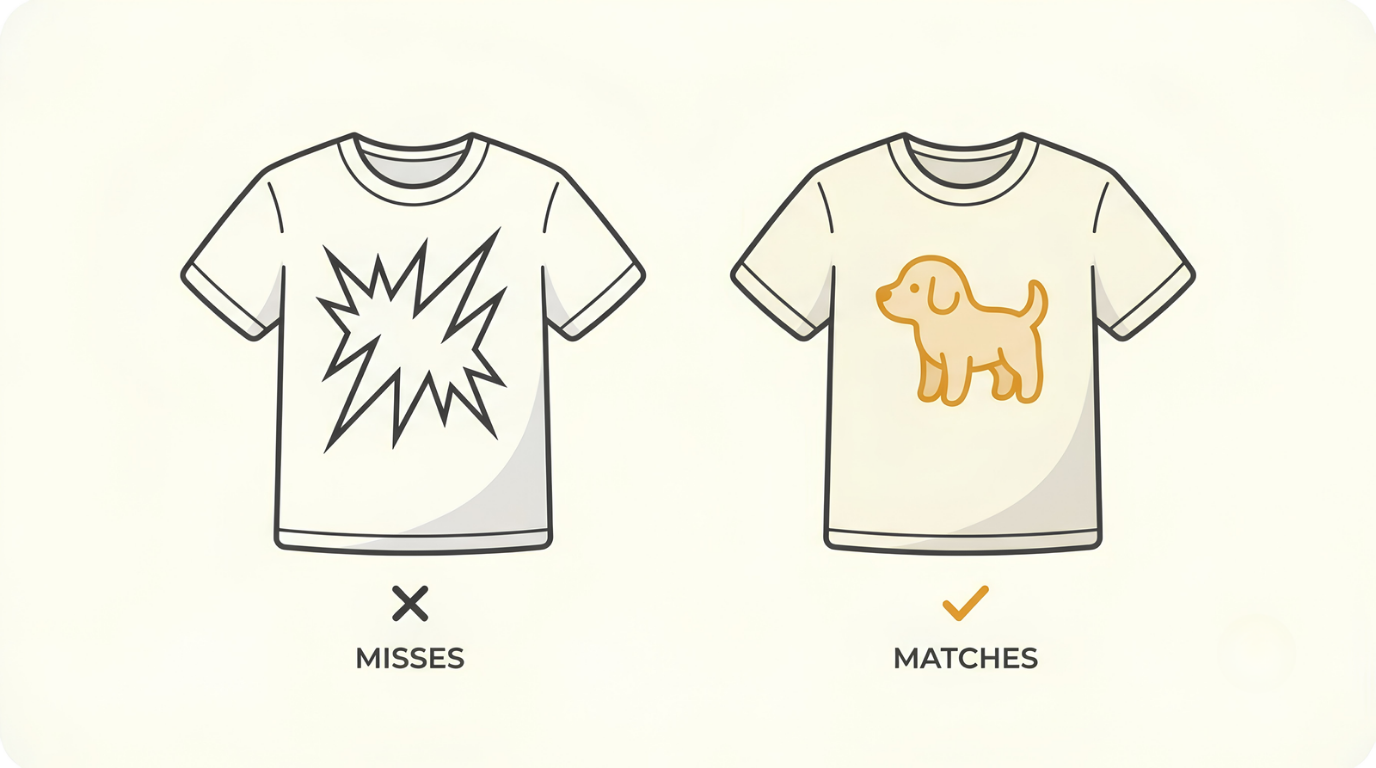
Second, and this one matters more, the look. Your design and your mockups have to fit the person you're selling to. A dog-mom shirt drawn in a harsh, heavy-metal font on a dark, moody mockup is going to miss, because that isn't the warm, cute feeling that buyer reaches for. The look has to speak to them before they read a single word.
The quickest read on the right look is the best-sellers in your niche. Open them and feel the vibe they share: the colors, the fonts, the mood, the way the mockups are styled. Match that, because it's what your buyer already responds to.
Then break it, just a little.
If your design and your mockup look identical to the top seller's, you've handed the shopper no reason to pick you over the listing with more reviews.
🎯 Vibe first. Copy the feel your niche's best-sellers already sell into, then change one thing so a shopper has a reason to click yours instead.
Look like you belong, then give them one reason to choose you.
Relevance earns the click. The offer earns the sale.
They click but don't buy: fixing conversions
Clicks with no orders means people are landing on your page and leaving. Two things turn that around: information and offer.
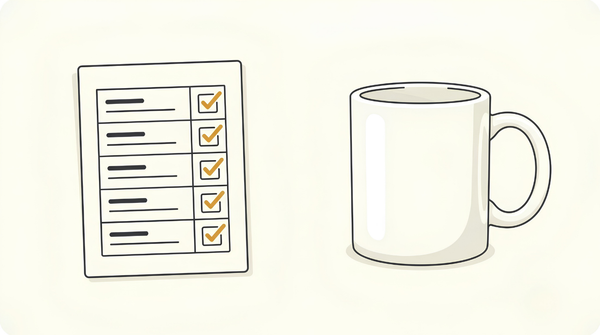
First, information. Nobody buys what they can't picture owning. On a t-shirt the obvious one is sizing. Leave it out and a shopper who can't tell if it'll fit just closes the tab, however good the design is. On a mug it's looser, but size and detail still help. Give people enough to feel sure.
Then the copy itself. The best place to learn what to write is sitting in your competitors' reviews. Read them. See what buyers rave about and what they gripe about, and fold both straight into your listing. Answer the worries before they're asked, and lead with what the product does for someone, not its spec sheet. A shirt isn't "100% cotton, unisex fit." It's the one they grab because it makes them laugh every time they open the drawer.
How to mine competitor reviews for your listing
Read the 5-star reviews.
Note the exact words buyers use for what they love. Those phrases belong in your copy, in their language, not yours.
Read the 1- and 2-star reviews.
Every repeated complaint is a worry your listing can answer up front, so the next shopper never hesitates.
Turn both into benefits.
Write what the product does for them, tied to a feeling, instead of listing specs.
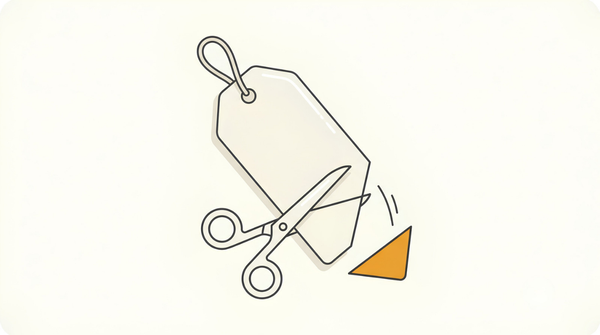
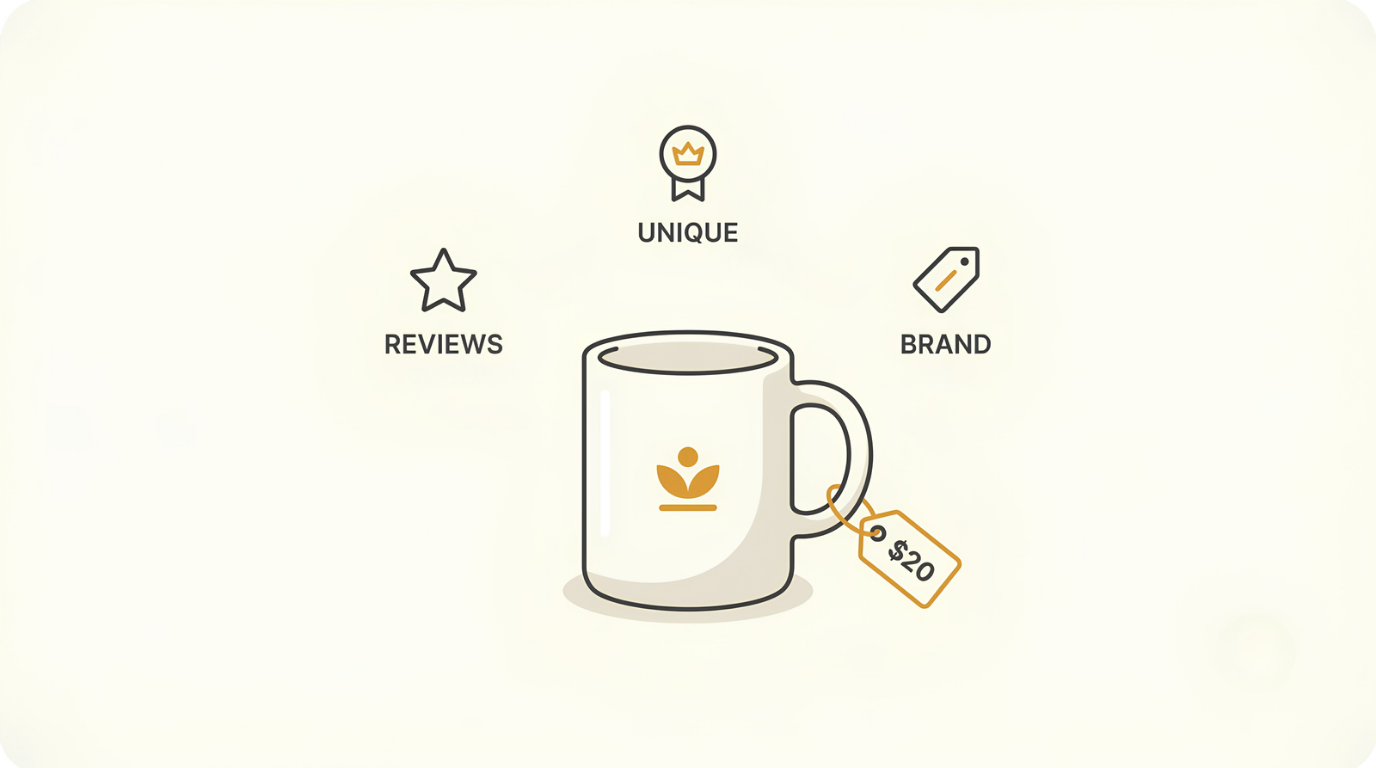
Second, the offer. This is the bigger lever, and it comes down to matching your price to your value. There's no single right price. A high number isn't greedy and a low one isn't clever, on their own. What matters is that the price and what you're actually giving line up.
If you want to charge more, be worth more: a design nobody else has, mockups that make you look a cut above, a brand that feels like something real. Give people a reason the higher price makes sense. If you're playing on cheap, the math flips and the offer leans on price instead. Neither is wrong. What loses is a premium price on a me-too product, or a race to the bottom you were never going to win.
Your price isn't a number. It's a promise, and the product has to keep it.
That's the whole funnel. Seen, clicked, bought, three steps, and a product that won't sell is stuck on exactly one of them. You don't fix a quiet listing by changing everything at once. You find the step that's leaking and you work on that one.
Get all three pulling in the same direction, and the thing that felt broken starts to move.
I'm putting each piece of this out in the open as I sharpen it in my own store. If you'd rather have it land in your inbox than go hunting for it, come along by email.
Talk soon,
Nick T