FBM or FBA? You're Asking the Wrong Question

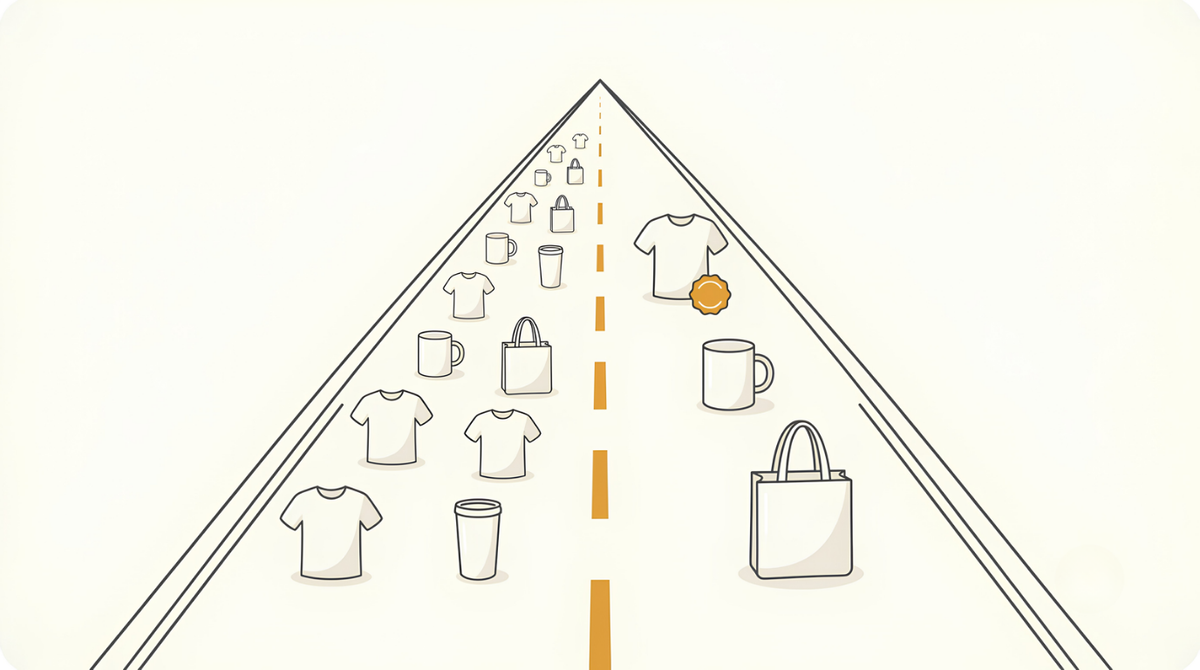
FBM and FBA are not two teams you pick between. They are two tools built for different jobs, and the print on demand sellers who do best tend to use both.
If you are trying to work out which one to start with, here is the short version. Begin on FBM, because it costs almost nothing to test, so you can learn the whole game without betting real money. Then, once a design proves people actually want it, move that winner to FBA to reach more buyers.
You are not choosing a side. You are choosing an order.
First, the plain version of each, because the letters hide simple ideas.
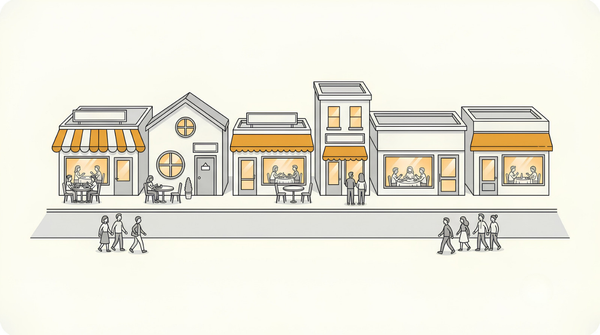
FBM stands for Fulfilled by Merchant. You handle the order, and in print on demand that means your supplier does. A customer buys, your supplier prints the item and ships it to their door, and Amazon just runs the storefront.
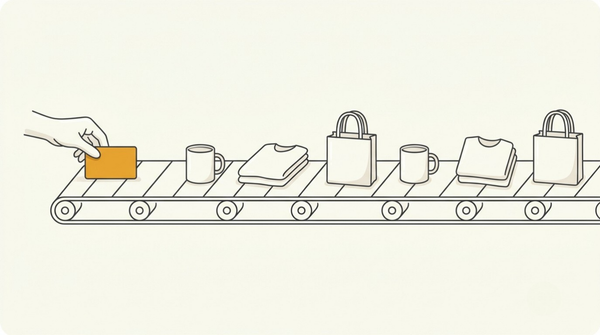
FBA stands for Fulfilled by Amazon. You send stock into Amazon's warehouses ahead of time, and when an order comes in, Amazon picks, packs, and ships it for you. That is what earns the Prime badge, the little tag that promises fast, free delivery.
Here is the part that trips people up in print on demand, where products are made to order and nothing exists until someone buys it. You cannot simply switch on FBA the way a normal seller sends in a pallet of identical mugs. To put a design on FBA, you print a batch of that one design up front and ship it into Amazon before a single sale.
That one fact shapes everything below. FBM lets you sell a thousand designs without owning a single item. FBA asks you to bet on a few designs and hold real stock.
Neither is better. They are just good at different things.
FBM is where you learn without losing
FBM is the testing ground. Because nothing gets printed until it sells, you can throw a huge range of ideas at the wall and only ever pay for the ones that stick.
- No inventory to buy. Nothing is made until an order comes in, so your catalog can be enormous and still cost you nothing to hold.
- Room to be wrong. Post a hundred ideas, see which ones catch, drop the rest. A design that flops costs you nothing but the time you spent making it.
- A real classroom. Since mistakes are cheap, this is where you actually learn the craft: keywords, mockups, and what a niche really wants.
It is also just easier to begin. No boxes to pack, no stock to forecast, no shipment to send into a warehouse. You design, you list, and your supplier does the rest the moment an order lands.
This is exactly what makes FBM the place to experiment. You can run one idea across fifty variations, a design for fifty different towns, say, and let real buyers tell you which town actually sells. On FBM that costs you nothing but design time. On FBA it would mean fifty separate batches of stock, most of them destined to gather dust.
The trade-off is reach. Amazon leans toward FBA, and Prime shoppers often filter for that badge, so an FBM listing has to work a little harder to be seen.
- Less visibility. Without the Prime badge, your listing can sit behind the FBA ones competing for the same shopper.
- A lower ceiling. For the same reason, one FBM listing usually will not climb as high as the exact same product would on FBA.
FBA is where you scale what already works
FBA is the amplifier. Once you know a design sells, handing it to Amazon puts it in front of far more people and makes them more comfortable buying.
- More reach. The Prime badge places you in front of the largest, most ready-to-buy slice of Amazon, and those listings tend to surface higher.
- More trust at the click. Fast, free, Amazon-handled delivery makes a shopper relax and hit buy, even from a store they have never heard of.
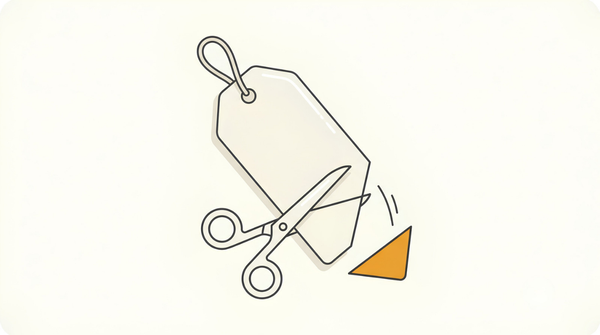
The cost is that FBA asks for money and commitment before you have proof.
- You pay up front. Printing a batch and shipping it in costs real money before you sell a thing, plus storage fees while it waits.
- You cannot test with it. Between printing, shipping into Amazon, and waiting to rank, putting an unproven design on FBA burns too much time and cash to use as a guess.
There is a second guess hiding inside FBA too: how much stock to send. Commit too little and you sell out and lose the ranking you paid to build. Commit too much and you are paying storage on shirts nobody wants. Amazon's fulfillment and storage fees take their own bite, so a slow mover can quietly lose money on FBA that it would have earned on FBM. That guess is simple once a design has a track record, and painful when it does not.
FBM is how you find out what works. FBA is how you scale what does.
So which one? Both, in the right order
The honest answer is both, and the order is what makes it work.
Post wide on FBM. Let the catalog do the searching for you and show you which designs people actually reach for. Then take those proven few, print a batch, and put them on FBA, where the reach and the Prime badge can carry them further than FBM ever could on its own.
💡 Start, then scale. Use FBM to find the designs buyers actually want, and save FBA for the handful that have already proven themselves. Same catalog, two stages.
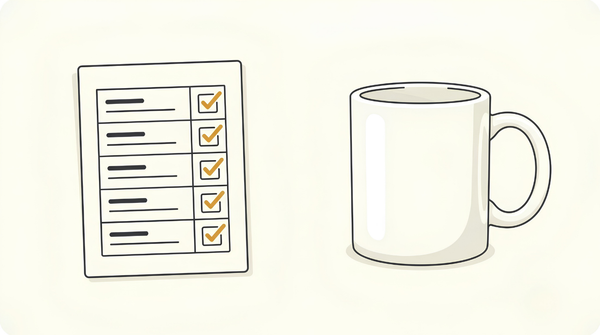
So how do you know a design is ready? It earns its way over. When one keeps selling on its own, week after week, with no push behind it, that is the signal it can carry the cost of stock. Until then it stays on FBM, where being unproven is free.
The two do ask slightly different things of you. FBM rewards breadth and patience: making a lot, reading the numbers, adjusting. FBA rewards judgment and a little nerve: picking the winners, holding stock, and managing what sells. You grow into the second by spending real time with the first.
So set your expectations kindly. Both work. Neither is a trick, and neither runs itself on day one. FBM is the cheaper teacher, FBA is the bigger stage, and you get to use them in that order.
Start where it is cheap to be wrong.
Get good there, then let FBA be the reward for the designs that earn it.
Talk soon,
Nick T