Amazon Removed Your Listing for Trademark Infringement? Start Here

Quick note before anything else: I'm not a lawyer, and none of this is legal advice. It's what I've personally run into selling print on demand on Amazon, and how I dealt with it. Amazon also changes its policies over time, so treat this as a map from someone who's walked the road, and check the current rules on Amazon's own site before you act on anything here.
Now, the situation.
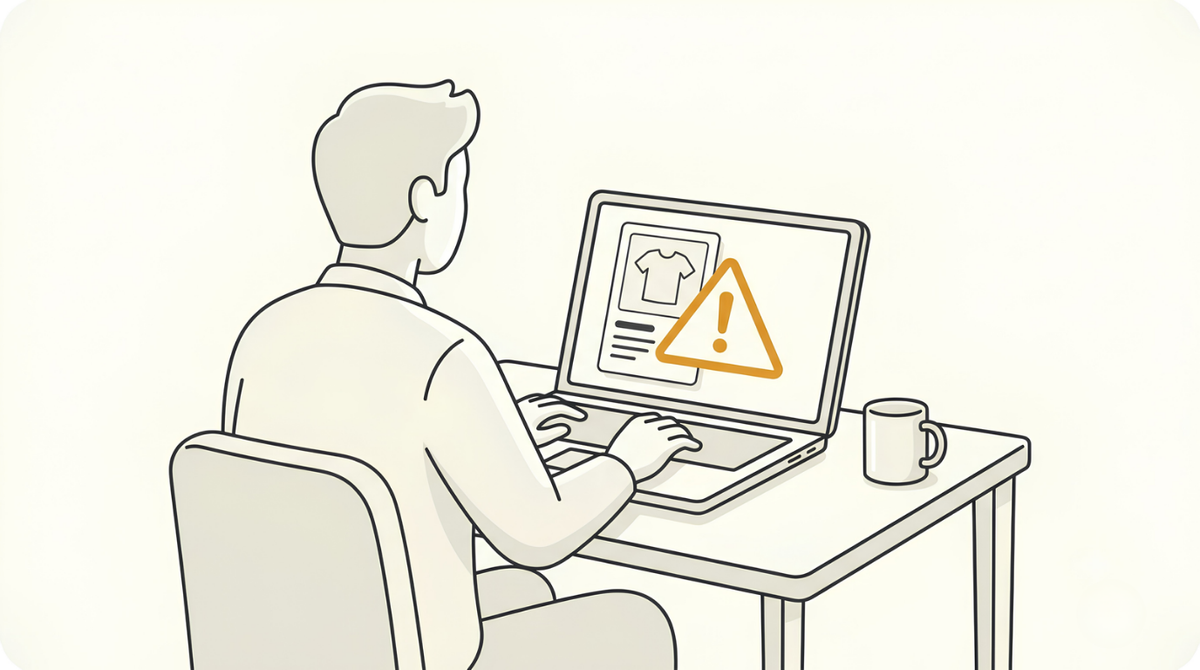
You did the work. You picked your phrase, ran it through TESS (the USPTO trademark search), and it came back clean. You made the design, built the listing, wrote the title and the bullet points, hit publish. Then the notification lands.
"Your listing has been deactivated due to potential trademark infringement."
Wait, why? You checked.
Why Amazon flags listings nobody reported
On most marketplaces, Etsy included, a listing usually comes down after a rights owner reports it. Amazon doesn't wait for that.
Amazon runs an automated system that goes looking for trademarks on its own.
And it doesn't only scan your design. It reads your images, your title, your bullet points, your description, everything on your detail page. A trademarked word sitting quietly in bullet 4 can pull the listing down just as fast as one printed on the shirt.
Amazon scans everything on your listing, not just the product.
The best defense is checking every word and every image before you list. But if you're reading this, it already happened. So the first job is figuring out which kind of flag you got, because the fix is different for each one.
Which violation do you actually have?
Open the Account Health page in Seller Central and read the exact name on the violation. There are common 3 types, they mean different things, and the fix for one does nothing for another.
Trademark, copyright, intellectual property: what's the difference?
Trademark
Protects the things that identify a brand: names, logos, slogans. "Nike" and "Just Do It" are trademarks. Put either on your shirt, or even in your title, and that's trademark infringement.
Copyright
Protects creative works: characters, artwork, photos, song lyrics. A shirt with Mickey Mouse on it never mentions Disney by name, but the character itself is copyrighted.
Intellectual property (IP)
The umbrella term covering both of the above, plus patents. When Amazon says "IP," it can mean either one, which is why you read the exact violation name before fixing anything.
1. Suspected Intellectual Property Misuse
Amazon's system found trademarked words somewhere on your listing. Nobody complained. The bot flagged it on its own.
Where the words sit decides the fix.
If they're on the detail page (title, bullets, description) and not on the product itself, the fix is simple. Remove them, save the listing, and wait about 48 hours. It should come back live on its own.
If the trademarked part is on the product, the design itself, there's no cleaning it up. Delete the listing and relist the corrected product under a new ASIN (the ID Amazon assigns every product). There's no way to appeal this violation type, so don't burn days hunting for an appeal button that isn't there.
2. Suspected copyright violation
This one usually points at the product itself. Amazon suspects your design uses something copyrighted, a character, a piece of art, a recognizable creative work.
Here you get 2 buttons: appeal or accept.
Appeal if you genuinely believe you haven't violated anything. You're telling Amazon its suspicion is wrong, so back the appeal up with evidence.
Accept if the flag has a point. You acknowledge the problem, delete the listing, and relist a corrected version.
3. Received Intellectual Property Complaint
The heaviest of the 3. This isn't a bot. An actual rights owner filed a complaint saying you used their trademark.
There's no real appeal path here either. The fix is to contact whoever filed the complaint (their contact sits in the notice) and ask them to retract it. If they withdraw the complaint, Amazon clears the violation.
It feels backwards that the person who reported you holds the exit door. But that's how it works, so keep the email polite and fix whatever they flagged.
When your case fits none of the boxes
Some flags are stranger than these 3. When yours is, don't guess. Amazon has Account Health support on call 24/7, and you can have them phone you straight from the Account Health page. A 10-minute call with someone who can see your exact case beats a week of forum threads. Use it to your advantage.
Fixes are the backup plan
Everything above gets a listing back. None of it is the goal. The goal is never triggering the flag at all.
That means checking the trademark database carefully, and not just for your designs. Every word on your detail page goes through the same check, the title, the bullets, the description, because the bot reads all of it. That check is already built into how I design, which I wrote out step by step here.
And read Amazon's intellectual property policy, then come back to it every so often. The rules you learned last year may not be the rules today.
Why one flag matters more than one listing
Every violation hits your Account Health Rating. Drop below 200 and your whole account is at risk of deactivation, not just the flagged listing. Stack up repeat violations inside 180 days and the account can go down too.
I'm not guessing at how bad that is.
I got my account deactivated once, and it took nearly 6 months to get it back.
6 months of a business I'd built sitting frozen. Trust me, it wasn't fun. Next to that, a 5-minute trademark check is the cheapest insurance in this whole business. Stay on the safe side.
Messes like that one are half the reason this blog exists. If you want to follow the build as it happens, what works and what blows up in my face, you can get each post by email as it goes live.
Stay safe out there,
Nick T