The One Return Setting Every Amazon POD Seller Needs

Who pays for a print on demand return? On Amazon, you do. Not by taking the product back onto a shelf, because there is no shelf. Most of the time, you pay by losing the sale.
If you sell POD on Amazon, sooner or later a return is coming, and when it does you'll hit a question most sellers never have to think about: where does the product actually go? This post walks through why that question has no good answer, and the one setting in Seller Central that makes the whole problem mostly disappear.
Amazon sides with the customer, every time
The truth about selling on Amazon is that the customer can return your product for whatever reason they come up with. Amazon backs them with something called the A-to-Z Guarantee, which is Amazon's promise to the buyer that if anything goes wrong with an order, Amazon will make it right. In practice that means if a customer wants their money back, they are getting their money back.
Even if the reason is they changed their mind.
That's not a loophole, it's the deal. Amazon built its whole reputation on being safe to buy from, and every seller on the platform, including you and me, benefits from that trust. The cost of it is that you don't get to argue a return.
Where does the product even go?
For most sellers, a return just means getting their product back. It goes on the shelf, it sells to the next person, and the whole thing is like the sale never happened.
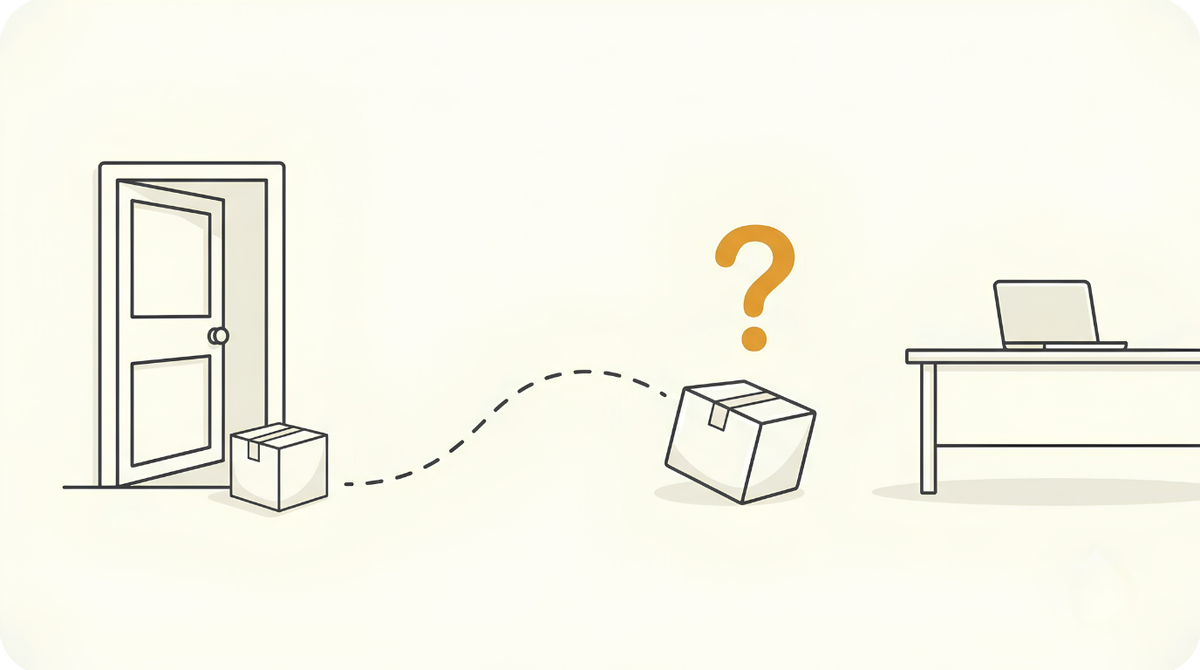
For us POD sellers, it's not that simple. Every product is made and customized for the one customer who ordered it, and we never store any products ourselves. That's the whole point of print on demand. So when a customer sends one back, there's no warehouse waiting for it.
If you live in the US, there's a workaround: have returns shipped to your own home, hold onto them, and send them out yourself the next time one sells. Some sellers do exactly that. But if you don't want all the hassle, or you don't live in the US, and your orders run through a print provider like Printify, there is no real way to take the product back.
You just lose the sale.
The setting that saves you the hassle
The move that fixed this for me is a returnless refund. It does exactly what it sounds like: the customer gets their refund and keeps the product, and nobody ships anything anywhere.
Setting it up takes 2 minutes in Seller Central:
- Click Settings in the top right, then Return Settings
- Open the Resolutions tab
- Click Create returnless resolution
- Select your product category
- Select all return reasons
- Select your marketplace
- Set the max price where the rule triggers. I set mine around $100
Letting the customer keep the product might sound like giving money away. But think about what the alternative actually gets you.
You were never getting the product back anyway.
The product has nowhere to go, and the cost of shipping it back would eat whatever it's worth. Letting the customer keep it just skips the pointless middle part. And if you're worried people will abuse it, in my experience very few customers ever take you up on it. It has never affected my numbers in any way I'd notice.
Returns happen. They're a normal cost of selling, and the goal isn't to fight every one, it's to make each one cost you as little time as possible.
The two ways a return plays out
Once the returnless refund is set up, every return lands in one of two forks.
The customer just doesn't want it anymore. They changed their mind, wrong size, whatever. The refund goes out, they keep the product, and you're done. Nothing else to do.
Something is actually wrong with it. The product arrived broken, or the print quality is off. This one has an extra step that gets your money back: ask the customer for a picture of the problem, then send that picture to your print provider. Most of them, Printify included, will refund you the production cost when the defect is on their end. So on these returns, the customer gets their money back and so do you.
That second fork is worth remembering, because it's the difference between eating the full cost of a bad print and eating none of it. One picture is all it takes.
Returns are the unglamorous side of this business, and most of what I share here comes from running into things like this the hard way. If you want to follow the build as it happens, the real numbers and the lessons included, you can follow along through email.
Talk soon,
Nick T