[Journey] Start Ugly: What My First Print on Demand Batch Looked Like

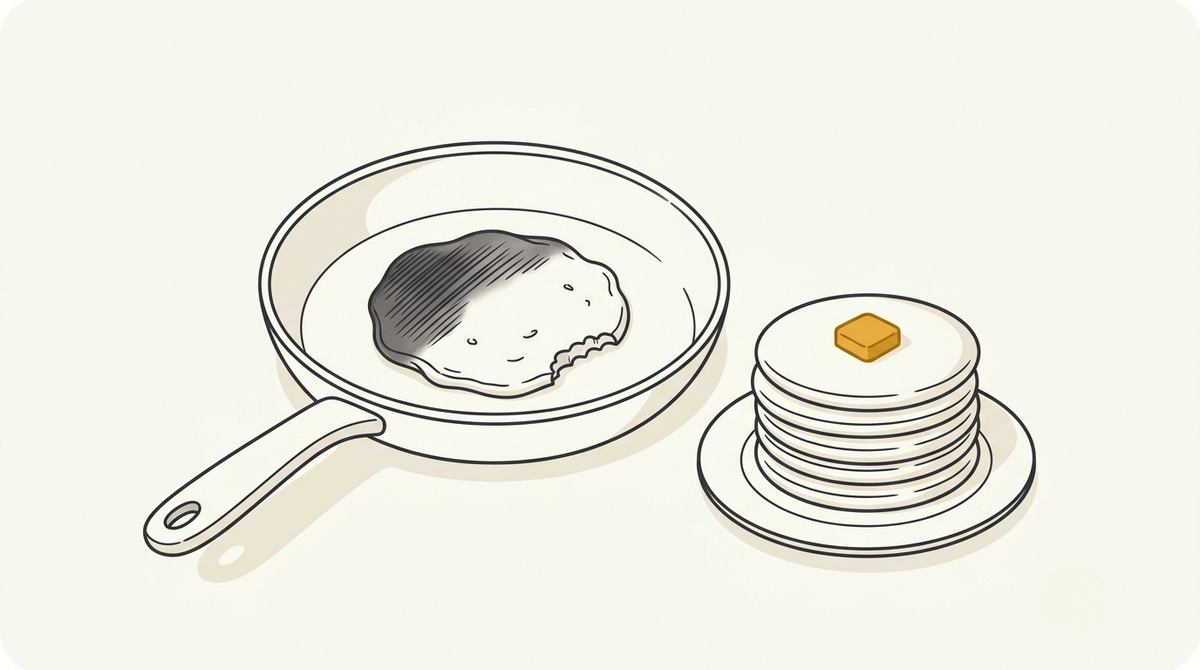
My first print on demand listings went live on Amazon in June 2024, and they were nowhere near perfect. Every title typed by hand, the same bullet points on every listing, one plain product image each. Slow and not very effective, but it got the batch to the end point, and that was the goal.
Posting right away instead of perfecting it first is how you actually learn. You see results, you spot what's wrong, you fix it. None of that can happen while the batch is still sitting on your desk.
Post it, then improve it. Not the other way round.
You start, you post, you see results, you diagnose, you improve the workflow, and it goes round again. That's the loop, and the only way into it is a batch that's live. So getting started fast mattered more to me than getting it right.
The bet behind the batch
I wanted a business I could lose at a thousand times and only needed to win at once. Lose a thousand, still make a profit. That's why I picked Amazon FBM. If you want the full reasoning, it's here.
That was the bet, so the batch had to be bulk products. One product on its own can't lose a thousand times. One design that spreads across a lot of niches can.
Research: the search bar was the only tool
I didn't overthink this phase. I searched Amazon and Etsy for products that were already selling and had the potential to be bulked. A lower BSR (Best Sellers Rank, Amazon's number for how well a product sells in its category) or any sign that a product had sold before was enough for me. No research tools. The search bar gave me what I needed.
The one filter that mattered: could this design be swapped? Take a phrase like "I'd rather be in Hawaii". Swap Hawaii for a different place and the rest of the design stays exactly the same. One piece of work, as many listings as you have places.
Design: text in Canva, swapped by Bulk Create
Every design was text-based. Nothing complicated, nothing anyone couldn't do themselves. I used Canva, the simplest design tool I knew, and one Canva app called Bulk Create. You set up one design, mark the word that changes, and it switches that variable out across a list. That's how one master design became a batch across a bunch of niches.
One design, one swappable word, and a list of niches. That was the entire design department.
Posting: Printify to Shopify to Amazon
All 50 designs in my first batch went on the same mug. I created each product in Printify by hand, one at a time.
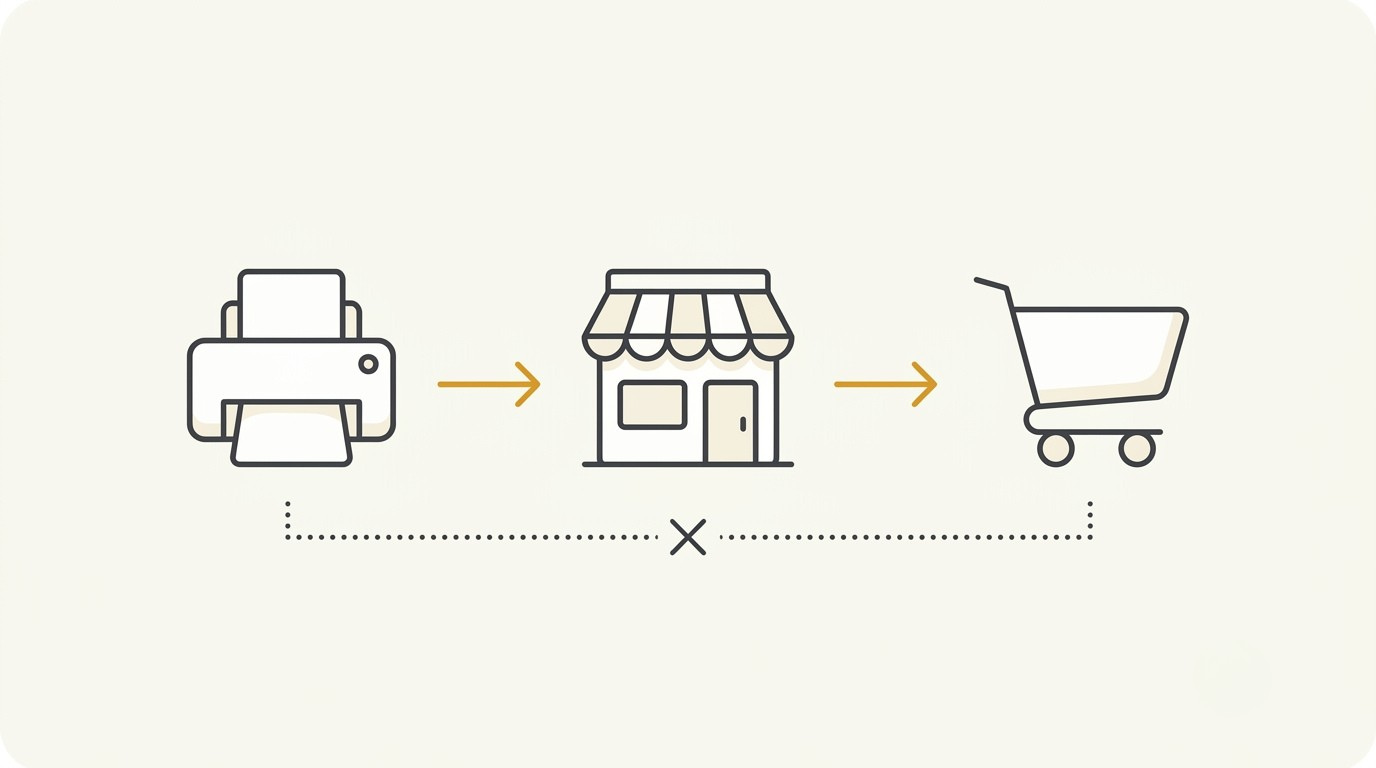
Then came the detour. Printify didn't connect to Amazon directly back then, so I pushed the products from Printify to Shopify, and used the Shopify connection to push them again to Amazon. Two hops to reach one marketplace.
Editing: handwritten titles and a Placeit mockup
Once the listings landed on Amazon, I went through each one and edited it there.
The titles were handwritten. No keyword tool, I just guessed the most logical thing a person would type to find that mug. The backend search terms stayed empty. The bullet points and the description were generic, the same ones reused across the batch, so the title was the only line I rewrote per product.
The main image got swapped too. I made mockups in Placeit and replaced the default image with one that looked better. That was it: one main image per listing, no infographic.
What I actually had after that
50 listings live on Amazon. Simple. Not great, but a real start, and the start is what mattered: I now had results to look at and a workflow with visible flaws to fix.
You learn fastest when the flaws are in front of you, and they're only in front of you once something is live.
If you're trying to perfect the first batch before posting it, I think you're skipping the part where the learning happens. Everyone can get a first batch out.
I'm still turning this loop, fix by fix. If you want to see what gets fixed next and what it changes, you can follow the build by email.
Get the first one out there,
Nick T