
Amazon Suppressed My Listing for Raising My Own Price

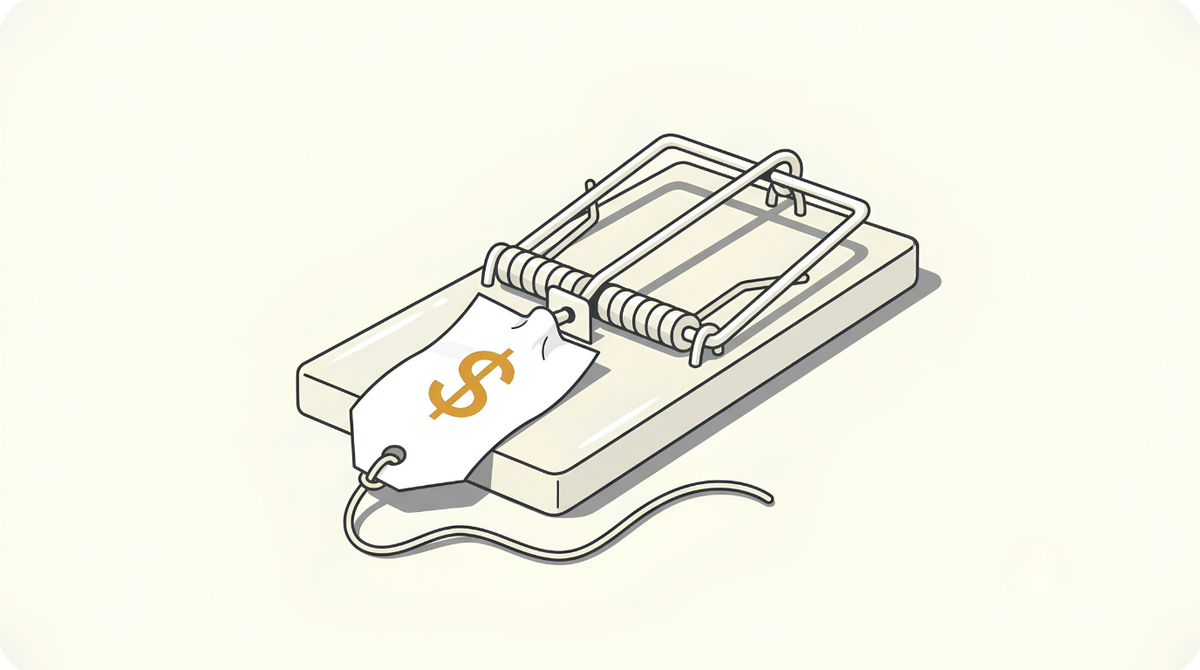
I raised the price on my own product, and Amazon took the listing down for it.
No complaint, no trademark problem, nothing wrong with the product. The listing went inactive with a flag called a potential high pricing error, and the "error" was a price I had planned to charge from the start. If that message just hit you, here's the short version: your price moved faster than Amazon was willing to believe, and the way out is slower than the way in. This is what tripped it, and exactly how I got mine back.
What the flag actually is
Amazon suppresses a listing when the price looks like a mistake or a trick. The policy exists to stop sellers taking advantage of customers with a price that is artificially low or artificially high, and the main signal it reads is your own recent price history. When a listing that has been selling at one price suddenly asks for a much higher one, Amazon doesn't see a seller adjusting. It sees a customer about to overpay, and it pulls the listing until the price comes back into a range it believes.
There's a twist that makes this worse for print on demand. One way to prove a high price is legitimate is documentation, something like a manufacturer's suggested price. A POD product has none. It didn't exist until somebody ordered it, so there is no paper anywhere that says what it should cost. The only lever you have is the price itself.
How I walked into it
The product was listed at $23.95, the price the math actually needs. That covers the supplier printing and shipping it, Amazon's cut, and roughly $10 of profit, the same pricing math I use on everything.
But a brand-new listing has no reviews and no history, and $23.95 with no proof is a hard first click. So I set a launch price: dropped it to $6.95 to remove the friction, let the first sales land, and let the listing rank. It worked. The sales came.
Then I tried to walk the price back up, and found out the ladder only goes one way.
$6.95 to $9.95 went through fine. $9.95 to $14.95, also fine. Then $14.95 to $19.95, and the listing was suppressed for a potential high pricing error. I never even got to ask for the full $23.95. And here's the absurd part: the listing started life at $23.95. The price Amazon flagged as abnormally high was $4 below where it began. But the history Amazon weighs is recent, and recently this was a $6.95 product. I had built that history myself, on purpose.
The launch price didn't just lower the price. It lowered what the price was allowed to become.
The climb back out
The fix that lifts the suppression isn't an appeal. It's the price. I dropped it back into the range that had already been accepted, and the listing came back the same way it left.
Then the climb: $2 at a time, 1 week at a time. $16.95, wait a week. $18.95, wait a week. And on, until it was back at $23.95 over a month later. Each raise stayed small enough to sit next to the existing history, and each week gave the new price time to become that history.
Each raise small enough to sit next to the history, each week long enough to become it.
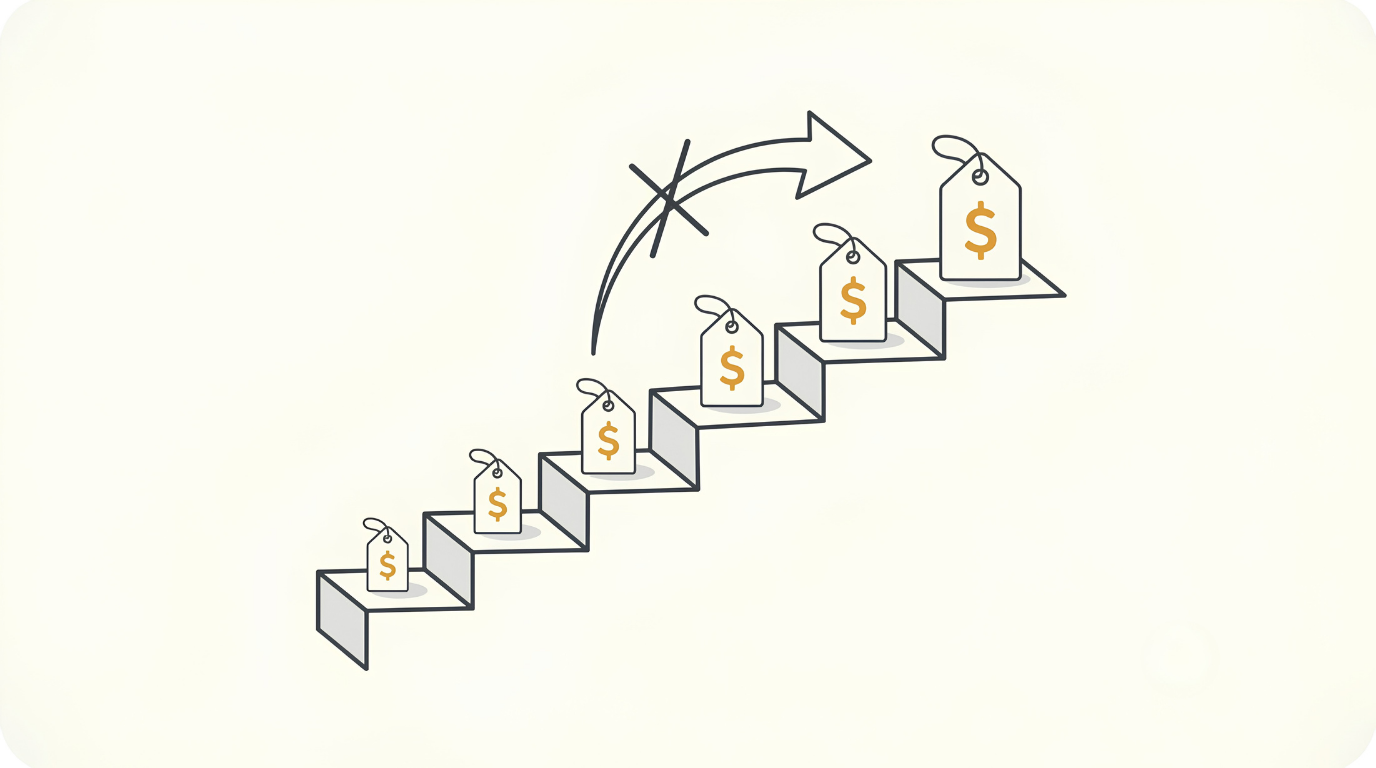
I can't tell you the exact threshold that separates a fine raise from a flagged one. Amazon doesn't publish it, and I found mine by hitting it. What I can tell you is that $2 a week never tripped it again, and every one of those weeks was spent selling below the price the product needed. The launch price was supposed to cost me a few slim weeks up front. It ended up costing the discount, plus the suppression, plus a month of underpriced sales on the way back.
Planning a launch price? Plan the exit first
A launch price is still a good tool. Mine did its job: friction gone, first sales in, listing ranked. The mistake wasn't discounting. It was discounting with no route back.
Two things I do differently now. First, I don't drop deeper than I'm willing to climb out of. The gap between the launch price and the real price isn't erased in one edit, it's walked back in small steps with waiting in between, so a deep discount is a long, slow recovery priced in weeks of thin margin. Second, I treat the climb as part of the launch cost before I set the discount. If the plan doesn't include the way back up, it isn't a launch price. It's just a lower price.
Take the way down only after you've planned the way back up.
This post exists because something broke, and that's most of what I write: the real numbers from running this store and the walls I hit doing it. If you'd like the next one when it happens, you can follow the build by email.
See you a few dollars higher —
Nick T